Case Study
The Atlantic
Philadelphia, PA
228
Apartments
22
Stories
LEED Gold
Certified
$900K
Cost Savings
1922
Building Built
Philadelphia's "Billionaire's Row" Gets LEED Gold
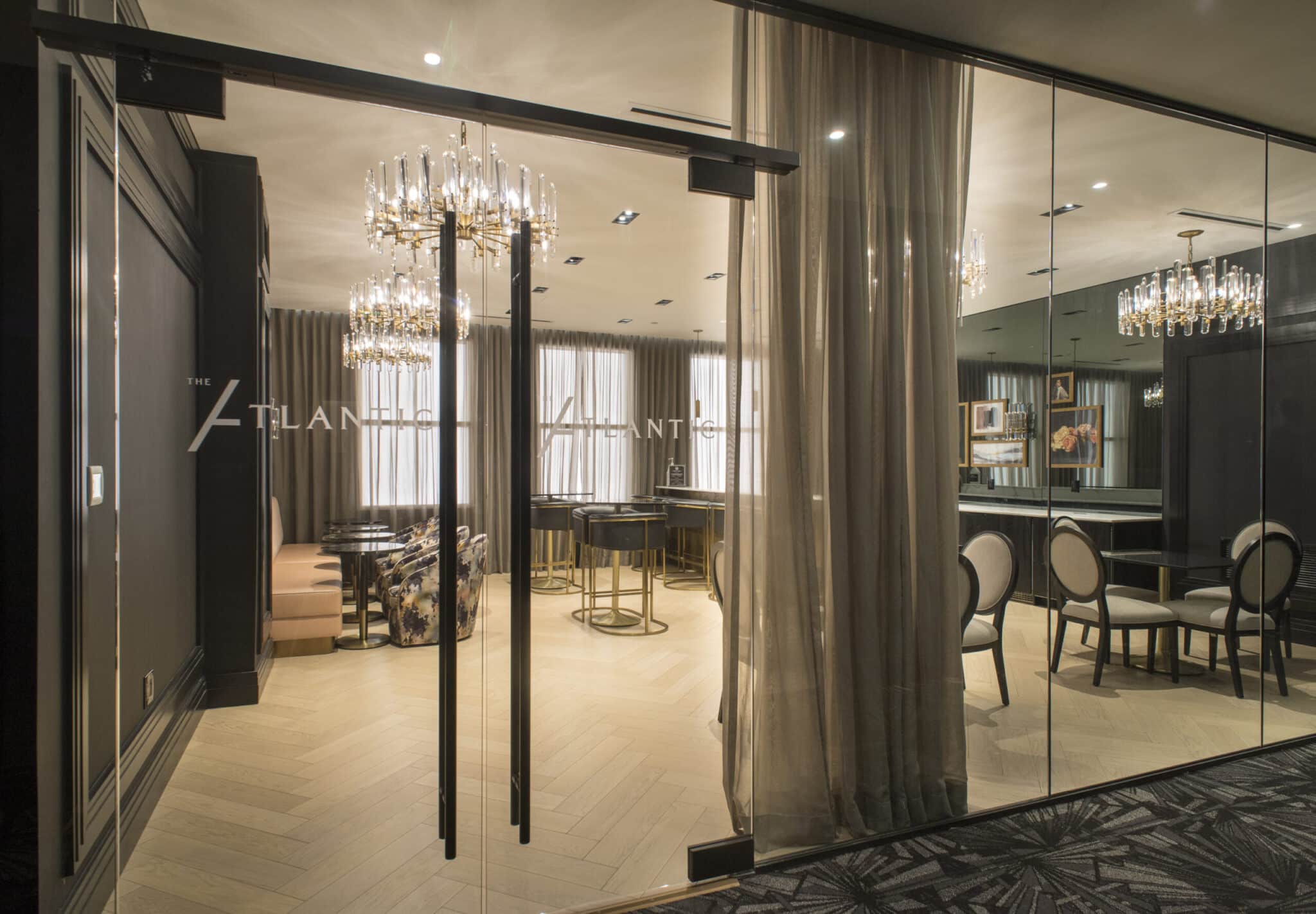
Flanked by The Merriam Theatre, The Kimmel Center for the Performing Arts, and The University of the Arts, The Atlantic's rich history began in 1922 as the headquarters of the Atlantic-Richfield Oil Company. The 22-story building is now certified LEED Gold and houses 228 apartments, the likes of which have few equals in The City of Brotherly Love.
Post Brothers, a multifamily property development company based in Philadelphia, owns and operates The Atlantic. Architect Rafael Vinoly was chosen to bring the 100-year-old building into Beaux Arts splendor. The project design included a focus on environmental sustainability.
Sustainability Achievements
The Opportunity
This retrofit had originally been spec'd as a water source heat pump (WSHP) project. Chuck Maun, salesman at Philadelphia-based Sass, Moore & Associates (SMA), saw an opportunity for significant savings.
"Water source heat pumps are certainly efficient enough to attain LEED Gold, but by suggesting an IPS system, we presented Post Brothers with an option to save money while increasing performance. Greater sustainability at a lower cost was very attractive to them."
— Chuck Maun, Sass, Moore & Associates
The IPS Solution
Advanced Engineering, an MEP and fire protection engineering firm in Philadelphia, designed the system. They had carved a niche in the multi-family housing market by converting large, old buildings into high-end apartments and condos.
"We had never designed an IPS system before, but we had worked with Post Brothers on several projects and wanted to explore the idea. After considering the project objectives and comparing all costs involved, IPS became the basis of design."
— Jerry Fink, Partner, Advanced Engineering
Williams fan coil units range in size from one to five tons, with the largest units serving common areas and mixed-use spaces. The hideaway-style fan coils feature ducted supply and ducted return. Each terminal unit is equipped with an individual thermostat, providing occupants with complete control of their environment.
System Specifications
Cooling
- 750-ton REYMSA fiberglass cooling tower
- Pair of 375-ton Dunham Bush screw compressors
- Double-wall stainless steel heat exchangers
- Economizer cooling when utility water is below 62°F
Heating
- Three large condensing boilers
- Water tempered to 120°F for supply
- Taco plate and frame heat exchangers
- 300 PSI rated for high-pressure requirements
Piping
- 304 stainless steel (3-10 inch)
- Copper (under 3 inch)
- Victaulic fittings throughout
- All NSF-61 certified
Ventilation
- AAON dedicated outdoor air systems (DOAS)
- Rooftop installation
- Ductwork to hallways and common areas
The Results
"We understand that the upfront cost savings provided by the Williams IPS system, when compared to the original WSHP design, were around $900,000. That's only the beginning—IPS systems are inherently inexpensive to maintain and operate, compared to any other commercial HVAC systems. They also feature the long service life that can be expected from any hydronic system."
— Chuck Maun, Sass, Moore & Associates
"A true four-pipe system would have been cost prohibitive. The IPS design allowed us to use a four-pipe fan coil approach, and the economies of installation made it competitive with other system types we were considering. It also yielded LEED points while creating an extremely quiet, comfortable indoor environment."
— Jerry Fink, Partner, Advanced Engineering
Products Used
Williams Equipment at The Atlantic
More Projects
Related Case Studies

Start Your Project
Learn how Williams IPS can save $900,000 or more on your multi-family project while achieving LEED certification.