Case Study
Hewing Hotel
Minneapolis, MN
124
Guest Rooms
116,000
Square Feet
126
Fan Coil Units
50%
Energy Savings
1897
Building Built
Historic Warehouse Transformed into Boutique Hotel
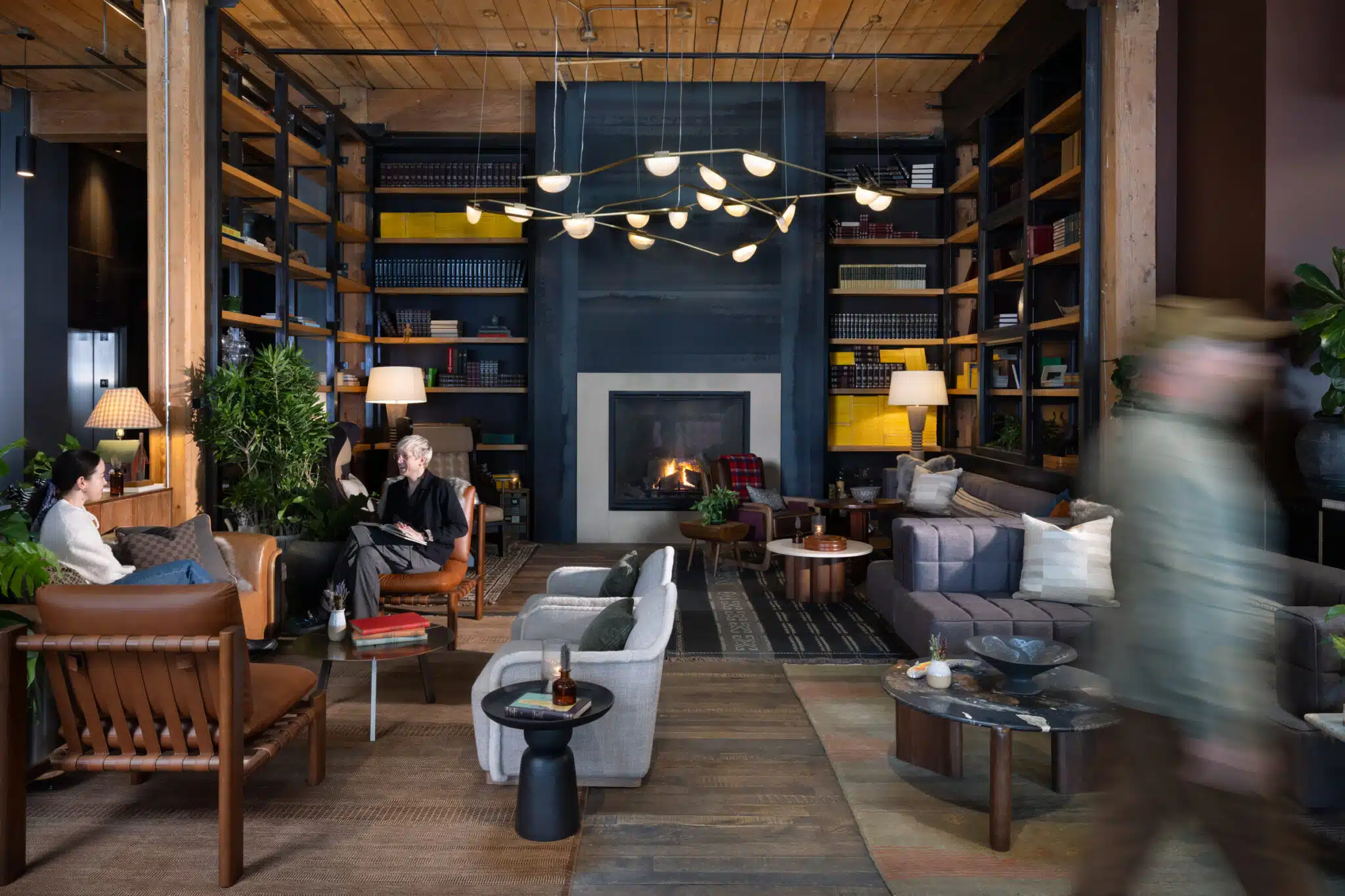
In 1897, long before Minneapolis and St. Paul sprawled together to form the Twin Cities, developer George Henry Andrews built an agricultural equipment warehouse in the now-hip North Loop neighborhood, just west of the Mississippi River.
Today, the brick and hand-hewn timber building stands as one of the finest luxury hotels in Minneapolis. The hotel's name is a nod to the lumber industry that once propelled the city to its current stature. The Hewing Hotel is part of a collection of boutique hotels curated by Aparium, a hospitality group specialized in converting historic structures into upscale accommodations.
The Challenge
The hospitality industry is known for its fierce competitiveness. Heating, cooling, and DHW production represent about 60 percent of the energy consumed at a hotel. Before the $38 million renovation began, careful consideration was given to the heating and cooling system that would serve the hotel.
"Minneapolis is a town of temperature extremes. The comfort of hotel guests can't be approached in an offhanded manner."
— Tom Suek, Director of Facilities, Hewing Hotel
The looming question for developers was whether minimizing the building's carbon footprint was counterproductive to providing premium comfort while limiting upfront costs—especially in a 126-year-old, 116,000-square-foot structure.
The Solution
Kelly Hauenstein, sales engineer at Schwab Vollhaber Lubratt, Inc., explored numerous options including water source heat pumps, two- and four-pipe hydronic systems, PTAC units, and VRF heat pumps.
PTAC units were dismissed due to inefficiency, noise, and visual impact. Two-pipe systems lacked simultaneous heating and cooling. Water-source heat pumps and four-pipe systems were too expensive upfront. VRF systems raised concerns about lifecycle and efficiency in northern climates.
"The customer kept coming back to the IPS fan coil system made by Williams. It had the right price tag, system longevity, and the ability to simultaneously heat and cool adjacent zones without placing noisy equipment in the guest room."
— Kelly Hauenstein, Schwab Vollhaber Lubratt, Inc.
How the IPS System Works
IPS (Integrated Piping System) utilizes the domestic water piping for hot and chilled water delivery to proprietary, NSF 61-certified fan coil units. The same hot and cold water used to supply sinks and showers is also used in the fan coil units.
- Two constantly-circulating water lines throughout the building: one hot and one cold
- All components rated for potable use with NSF-61 certified copper coils
- Eliminates dedicated hydronic system piping from scope of work
- Economizer cooling using utility water at 49°F annual average
The Results
Throughout the building's guest rooms and common areas, 126 Williams LH-R fan coils are installed above the ceiling. The LH-R fan coil, with a rear return-air plenum, provides 200-1,200 CFM capacity.
"We realized a 50 percent cost savings at the Hewing Hotel compared to other 100-room properties of about the same size within our network. This was no doubt the result of pairing a high efficiency boiler with the IPS system. I was shocked by the results and recommended IPS for our other properties."
— Andy Lushi, Former Director of Facilities
"I really appreciate the simplicity of the IPS system. I've maintained an old sky scraper with a radiant system and a water-source heat pump system. Comparatively, the IPS system has been the best from a comfort and maintenance perspective. This is a pain-free HVAC system with fantastic comfort levels all throughout the building."
— Tom Suek, Director of Facilities
Products Used
Williams Equipment at Hewing Hotel
More Projects
Related Case Studies
Start Your Project
Learn how Williams IPS and fan coil systems can reduce costs and improve comfort for your hospitality project.